Knowing Your Mission & Purpose
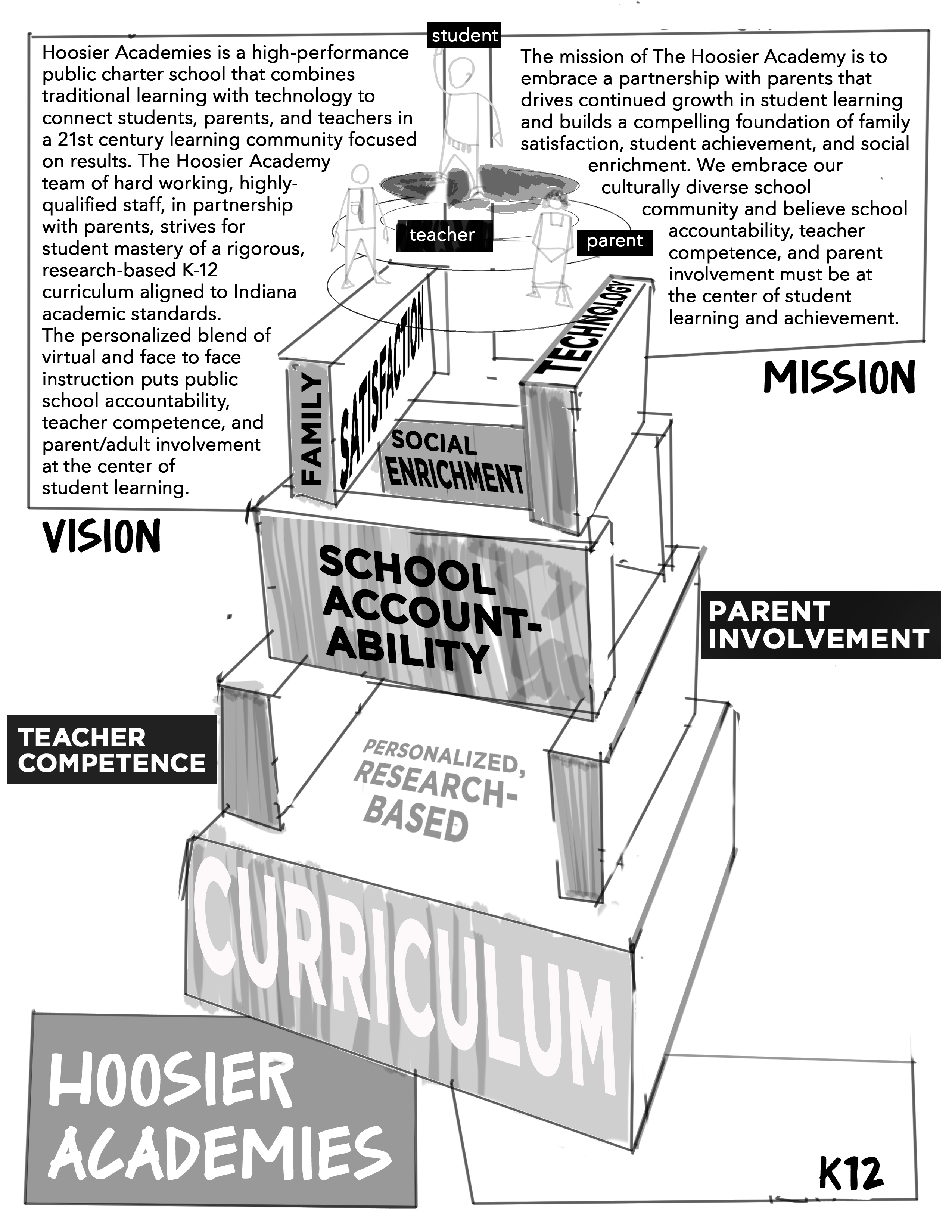
A Graphic Representation of Our Organization’s Study of our Mission & Vision. Thanks Mike Fleisch!
We are working on this very process right now in the schools I lead, Hoosier Academies. I have attached some visuals of our work in this area thus far. It is our desire that this process go so much further than just having words. We want our mission and vision to truly represent the shared purpose of all stakeholders in putting students first. By doing so, we can then budget on purpose, structure on purpose, staff on purpose, program on purpose, and strategic plan on purpose. We must know our mission because not everything is in life is worth doing. Without purpose it is hard to discern what is worth doing. In week 45’s lesson in A Year With Peter Drucker (Maciariello, 2014), five reasons for being purpose driven:
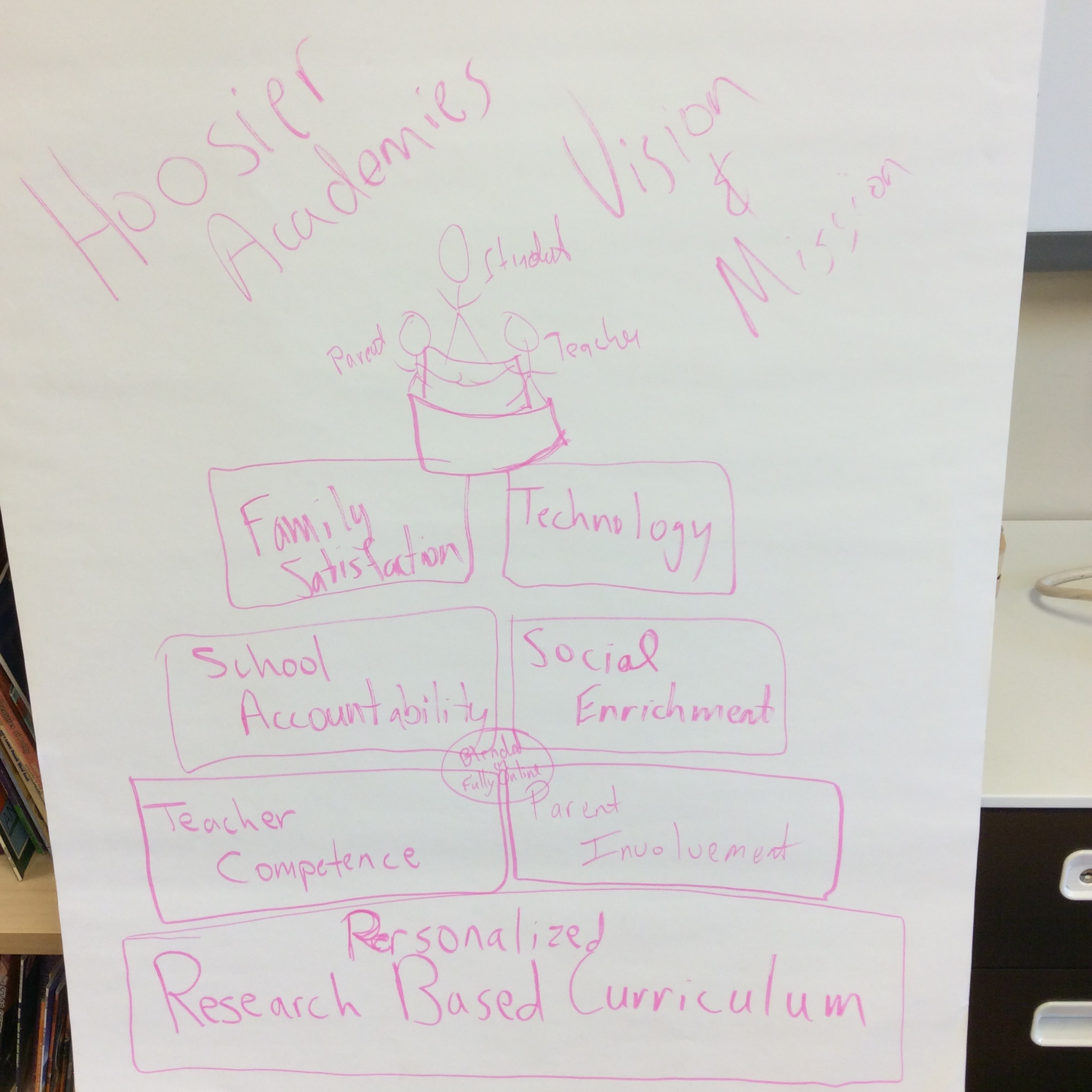
1st Draft of Our Graphic Study of Our Mission & Vision
- Purpose builds morale.
- Purpose reduces conflict in organizations.
- Purpose provides vision.
- Purpose allows concentrating.
- Purpose provides a system of evaluation.
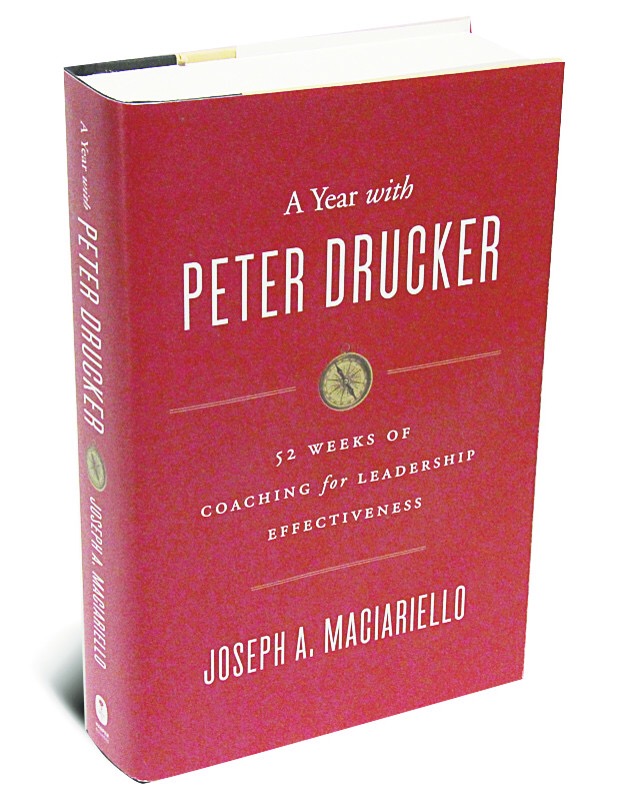
Drucker (Maciariello, 2014) posited that a theory of business needed three parts to be successful. First, there needed to be defined assumptions about the environment of the organization. Second there must be a specific mission. Drucker put this so well, saying, “The assumptions about mission define what an organization considers to be meaningful results – they point to how it envisions itself making a difference in the economy and society at large.” (Maciariello, 2014, p.353) Finally, core competencies define where an organization must excel in order to maintain leadership.
 One of the main reasons we are going through this process right now was driven home by the fact that a mission must be tested against reality. Our schools had not taken a look and really studied it’s mission and vision since the start of the schools. No mission lasts forever. Also, we have to remember what Drucker (2014) taught, “Knowledge is a perishable commodity.” (p. 355) We must not procrastinate if our mission and vision are obsolete or no longer match our purpose. Additionally, we must rethink the assumptions and core competencies on which our mission and vision are based and update the premises on which our organizations are operating. I always have to remind myself and our team to stay focused on the things our organization must do extremely well in order to succeed in carrying out our mission. You will notice in the graphic representation of our mission and vision we chose to use a Jenga theme (I will be doing a post dedicated to the process we are using with our Graphic Facilitator, Mike Fleisch, later). We really think in the case of a school this is such a great way to look at our purpose, vision, and mission using because we have the student at the top, but if any other area fails it brings down the tower and does not allow us to carry out our core value you of putting students first. We must support those areas of required excellence by offering continuing professional development and education.
Reference
Maciariello, J. A. (2014). A year with Peter Drucker: 52 weeks of coaching for leadership effectiveness. New York, NY: HarperCollins Publishers.
 Byron's Babbles
leave a comment